
 Esperanto
 Shqiptare
 Euskara
 Zulu
 Latinus
 Cymraeg
 தமிழ்
 Slovak
 Slovak
 Afrikaans
How to Choose a 1L Cold Brew Pot
Sep 05,2025
Views:
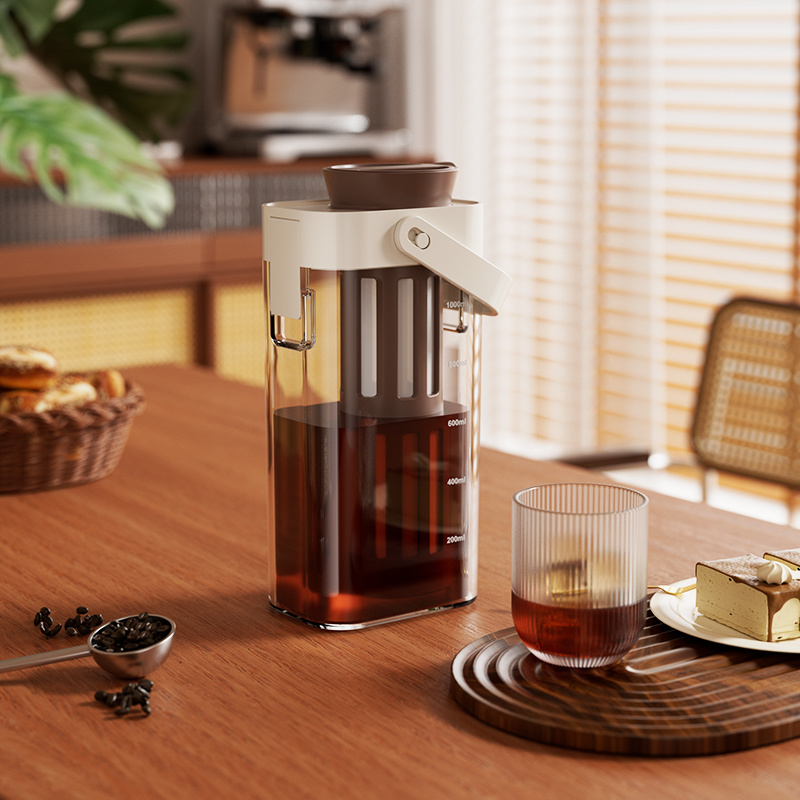
1. Why Choose a 1L Cold Brew Pot? The "Golden Adaptability" Behind the Capacity
Before choosing a cold brew pot, many people struggle with capacity: 500ml is too small to quench thirst, while 2L takes up too much space and is easy to waste. The 1L (1000ml) capacity solves these pain points perfectly:
Home Scene Adaptation: Suitable for 1-2 people’s daily consumption. A single batch can be stored in the refrigerator for 2-3 days, ensuring freshness while avoiding frequent preparation.
Easy Storage: Most 1L cold brew pots have a height of 25-30cm and a diameter of 10-15cm, which can easily fit into the refrigerator’s fresh-keeping compartment without occupying too much space.
Cost-Effective: Compared to small-capacity pots, 1L models have higher efficiency for a single brew; compared to large-capacity pots, they are more affordable, making them ideal for beginners on a budget.
Whether paired with breakfast, used to refresh yourself in the afternoon, or served to friends on weekends, a 1L cold brew pot can meet your needs. It is the "golden capacity" that balances practicality and convenience.
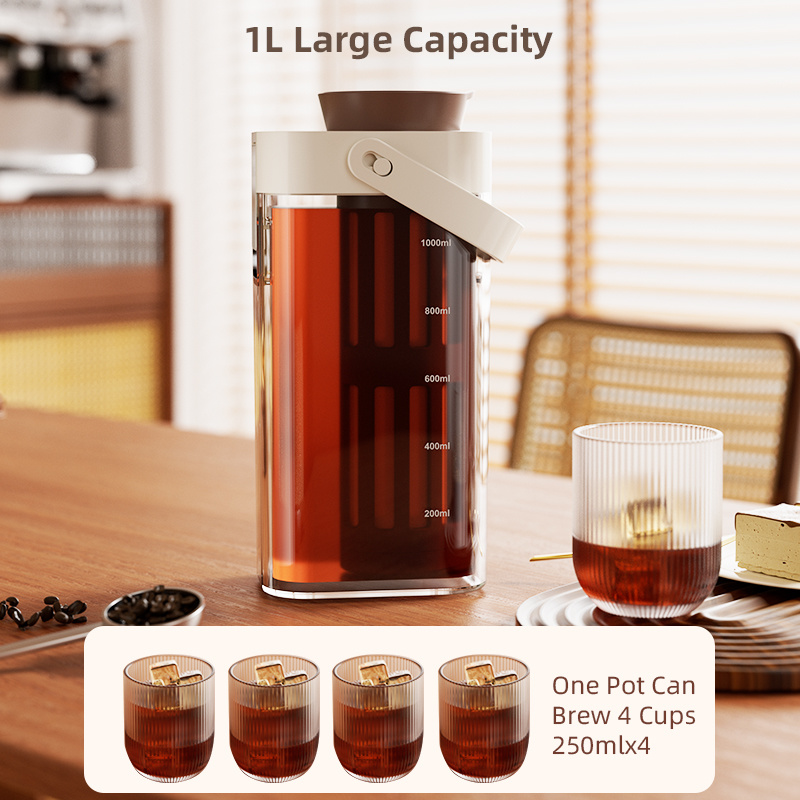
2. 3 Core Criteria for Choosing a 1L Cold Brew Pot: Avoid 90% of Pitfalls
Choosing the right 1L cold brew pot is essential to ensure the taste of cold brew and usage safety. Pay close attention to the following 3 key points:
1. Material: Prioritize "Food-Grade Materials + Borosilicate Glass/Plastic" to Avoid Harmful Substances
Cold brew requires long-term steeping (usually 12-24 hours), so material safety is crucial. While borosilicate glass is ideal for pot bodies, food-grade plastic is also a viable option for specific needs, and the filter’s quality directly impacts taste:
Pot Body:
Food-Grade Plastic: A lightweight, shatterproof alternative—ideal for households with kids or outdoor use (e.g., picnics). Choose pots made of BPA-free, FDA-certified plastic (such as Tritan) to ensure no harmful chemicals leach into the cold brew. Note: Plastic pots are not suitable for hot water or high-temperature disinfection; clean them with room-temperature water only.
Filter: Stainless steel precision extended filters are the upgraded choice for optimal extraction, alongside basic 304 stainless steel or food-grade PP filters.
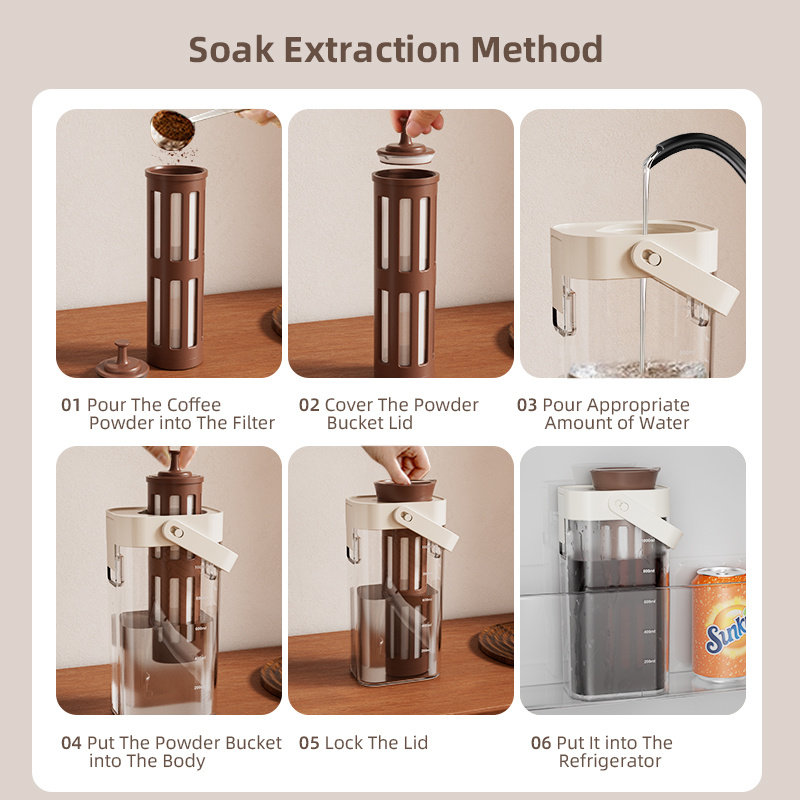
Stainless Steel Precision Extended Filters: These filters feature a longer design (usually 10-12cm in length, covering 2/3 of the pot’s inner height) and ultra-fine mesh (50-80 microns). The extended length ensures coffee grounds are fully submerged in water, promoting even extraction; the fine mesh traps tiny coffee fines (which cause bitterness or cloudiness) while allowing smooth cold brew to flow through. They are also more durable than PP filters and resistant to rust or deformation after long-term use.
Basic 304 Stainless Steel Filters: Reliable for daily use, with good filtration and easy cleaning.
Food-Grade PP Filters: Lightweight and budget-friendly, but replace them every 6-12 months if signs of wear (e.g., warping) appear.
Avoid: Models with no filter, oversized pores, or non-food-grade metal filters (may rust and contaminate drinks).
Lid/Handle: Choose a lid with a silicone seal (prevents odor transfer in the fridge). For plastic pots, ensure the handle is integrally molded (avoids detachment); for glass pots, opt for anti-slip, heat-insulating handles (safer when handling).
2. Design: Details Determine User Experience—Don’t Ignore These Features
A high-quality 1L cold brew pot will be more tailored to daily use in terms of design, especially when paired with a stainless steel precision extended filter:
Wide-Mouth Design: A pot mouth with a diameter of ≥8cm is essential—especially for pots with extended filters. It makes it easy to add coffee grounds (without spilling into the pot body) and remove the longer filter for cleaning.
Scale Markings: Clear "ml scale" markings (500ml, 750ml, 1000ml) help control the coffee-to-water ratio (1:8-1:10). For pots with extended filters, note that the filter occupies ~50-80ml of space—adjust water volume slightly to avoid overflow.
Leak-Proof Pouring: A spout with a flow guide design prevents spills. Some models with extended filters also have a "filter lock" (a small clip or groove) to secure the filter in place during pouring, avoiding filter movement or coffee grounds leakage.
Dust Cover: High-end models often include a dust cover to protect the pot mouth and filter from dust when not in use—useful for plastic pots stored on countertops.
3. Brand: Prioritize Reputable Brands, Avoid "Three-No Products"
Although 1L cold brew pots have low technical thresholds, branded products offer better quality control—especially for plastic pots and precision filters. Recommended reputable brands in 2025:
Budget-Friendly Options (Under $20): Joyoung (BPA-free plastic pots with basic stainless steel filters), Bear (glass pots with detachable extended filters).
Mid-to-High-End Quality Options: Morphy Richards (Tritan plastic pots + 304 stainless steel precision extended filters), Buydeem (borosilicate glass pots with ultra-fine extended filters and partitioned extraction).
Professional Coffee Brand Options: Chemex (glass pots with proprietary extended filters for balanced extraction), HARIO (heat-resistant glass pots with precision mesh extended filters—ideal for coffee enthusiasts).
When purchasing, check whether plastic pots have "BPA-free" and "FDA-certified" labels, and ensure extended filters are marked "304 stainless steel." Avoid "three-no products" (no brand, no safety certifications, no instruction manual).
3. Homemade Cold Brew Coffee with a 1L Cold Brew Pot: 3 Steps to Save Half the Cost of Coffee Shops
With a 1L cold brew pot—especially one with a stainless steel precision extended filter—making cold brew coffee at home is simple, and the filter ensures a smoother taste. Here is a detailed tutorial:
Preparation Materials
1 x 1L cold brew pot (glass or BPA-free plastic)
100g medium-roast coffee beans (Arabica beans recommended for smoothness; avoid dark-roast beans with burnt bitterness)
800-950ml room-temperature purified water (reduce to 800-850ml if using an extended filter, to account for filter volume)
1 x coffee grinder (grind size: slightly coarser than granulated sugar—too fine a grind may clog the extended filter’s fine mesh)
Production Steps
Grind the Coffee Beans: Grind into coarse powder. If no grinder, ask the merchant for "coarse grind for cold brew" (specify if using an extended filter—coarser grounds prevent clogging).
Load into the Cold Brew Pot: Place the stainless steel precision extended filter into the pot. Pour coffee grounds into the filter (fill no more than 2/3 of the filter—overfilling may block water flow). Slowly pour in purified water, stirring gently with a spoon to ensure all grounds are soaked (the extended filter’s length will keep grounds submerged evenly). Do not exceed the 1000ml scale line.
Refrigerate for Extraction: Tighten the lid and place in the fridge (2-5℃) for 12-16 hours. For extended filters: Shorten extraction by 1-2 hours if you prefer a lighter taste (the fine mesh extracts flavor more efficiently); avoid exceeding 18 hours (may cause over-extraction).
Serving Tips
After extraction, lift the extended filter (it will drip slightly—place it on a plate for 1-2 minutes to collect excess liquid). Pour cold brew directly, or add ice, milk, or syrup. The extended filter’s fine mesh ensures no sediment—enjoy a clear, smooth drink.
Store leftover cold brew in the fridge for up to 3 days. For plastic pots: Avoid storing for more than 2 days to prevent subtle odor absorption.
Versatile Use: For cold-brew tea (green/oolong) or fruit tea, use the extended filter to hold tea leaves or fruit chunks—its length keeps ingredients submerged, and the fine mesh filters out tea leaves or fruit pulp. Reduce extraction time to 4-8 hours.
Previous

Sign up for exclusive offers and updates!


CONTACT
Factory: Qian Feng Industrial Zone,Siqian Town, Xinhui District,Jiangmen City, Guangdong, China
Office:Wanda Plaza, 166 Fazhan Avenue, Pengjiang District,Jiangmen City, Guangdong, China
HongKong Office(Highwin Enterprise Ltd):Room A,13th Floor, Block 1, Camel Paint Building, 62 Hoi Yuen Road, Kwun Tong, Kowloon, Hong Kong